
How to pray witr, step by step
How to pray witr, step by step
Witr in three rak‘ahs, with the qunut and the audio of each formula, according to your school.
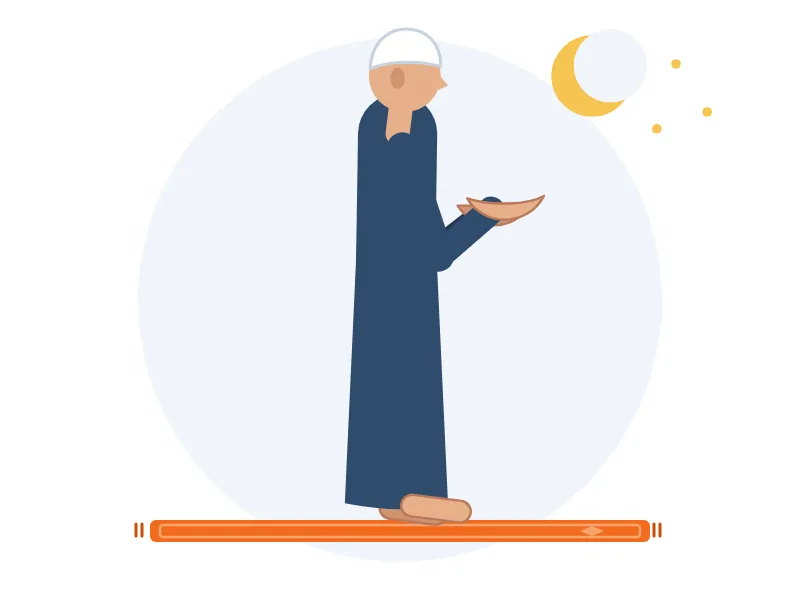
Witr (“odd”) closes the night prayers, between ‘Isha and dawn. It can be prayed as one, three, five rak‘ahs or more; this guide shows the most common form, three rak‘ahs. “Make witr the last of your prayers at night.”
By default, the school most followed by readers of this language; the views of the other schools remain visible.
The steps
-
When and how many?After ‘Isha and before dawn; one rak‘ah at least, usually three.
Obligatory (wajib)SunnahSunnahSunnah
Its time runs from the end of the ‘Isha prayer until dawn. Someone who expects to wake at night may delay it; otherwise, pray it before sleeping.
According to the Hanafi school
Witr is obligatory (wajib): three rak‘ahs, prayed together, with a single salam.
According to the Maliki school
Confirmed sunnah: two rak‘ahs (the “shaf‘”) with a salam, then one rak‘ah on its own.
According to the Shafi‘i school
Confirmed sunnah: one to eleven rak‘ahs; three are prayed as two then one, or all together.
According to the Hanbali school
Confirmed sunnah: one to eleven rak‘ahs; three are prayed as two then one.
The views of the four schools
- Hanafi Obligatory (wajib)
Witr is obligatory (wajib): three rak‘ahs, prayed together, with a single salam.
- Maliki Sunnah
Confirmed sunnah: two rak‘ahs (the “shaf‘”) with a salam, then one rak‘ah on its own.
- Shafi‘i Sunnah
Confirmed sunnah: one to eleven rak‘ahs; three are prayed as two then one, or all together.
- Hanbali Sunnah
Confirmed sunnah: one to eleven rak‘ahs; three are prayed as two then one.
References Abu Dawud 1422, al-Bukhari 998, al-Bukhari 990
- 1st rak‘ah
-
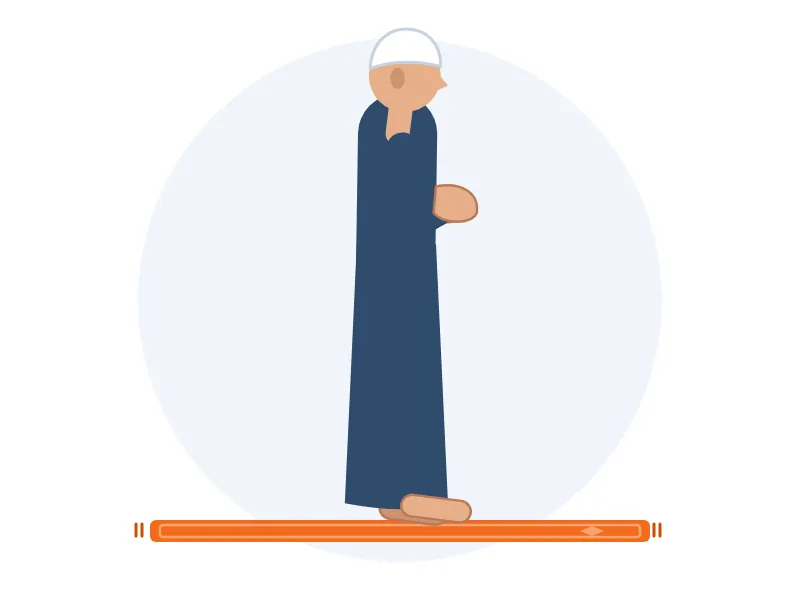 1st rak‘ahTakbir, al-Fatiha, then preferably Surah al-A‘la.
Begin with the takbir, recite al-Fatiha and then, preferably, Surah al-A‘la, and complete the rak‘ah as usual.
Takbir
اللَّهُ أَكْبَرُ
Allāhu akbarAllahu akbar
Allah is the Greatest.
Al-A’la, verses 1–19
بِسْمِ ٱللَّهِ ٱلرَّحْمَٰنِ ٱلرَّحِيمِ
سَبِّحِ ٱسْمَ رَبِّكَ ٱلْأَعْلَى ١ ٱلَّذِى خَلَقَ فَسَوَّىٰ ٢ وَٱلَّذِى قَدَّرَ فَهَدَىٰ ٣ وَٱلَّذِىٓ أَخْرَجَ ٱلْمَرْعَىٰ ٤ فَجَعَلَهُۥ غُثَآءً أَحْوَىٰ ٥ سَنُقْرِئُكَ فَلَا تَنسَىٰٓ ٦ إِلَّا مَا شَآءَ ٱللَّهُ إِنَّهُۥ يَعْلَمُ ٱلْجَهْرَ وَمَا يَخْفَىٰ ٧ وَنُيَسِّرُكَ لِلْيُسْرَىٰ ٨ فَذَكِّرْ إِن نَّفَعَتِ ٱلذِّكْرَىٰ ٩ سَيَذَّكَّرُ مَن يَخْشَىٰ ١٠ وَيَتَجَنَّبُهَا ٱلْأَشْقَى ١١ ٱلَّذِى يَصْلَى ٱلنَّارَ ٱلْكُبْرَىٰ ١٢ ثُمَّ لَا يَمُوتُ فِيهَا وَلَا يَحْيَىٰ ١٣ قَدْ أَفْلَحَ مَن تَزَكَّىٰ ١٤ وَذَكَرَ ٱسْمَ رَبِّهِۦ فَصَلَّىٰ ١٥ بَلْ تُؤْثِرُونَ ٱلْحَيَوٰةَ ٱلدُّنْيَا ١٦ وَٱلْـَٔاخِرَةُ خَيْرٌ وَأَبْقَىٰٓ ١٧ إِنَّ هَٰذَا لَفِى ٱلصُّحُفِ ٱلْأُولَىٰ ١٨ صُحُفِ إِبْرَٰهِيمَ وَمُوسَىٰ ١٩
sabbiḥi is'ma rabbika l-aʿlā · alladhī khalaqa fasawwā · wa-alladhī qaddara fahadā · wa-alladhī akhraja l-marʿā · fajaʿalahu ghuthāan aḥwā · sanuq'ri-uka falā tansā · illā mā shāa l-lahu innahu yaʿlamu l-jahra wamā yakhfā · wanuyassiruka lil'yus'rā · fadhakkir in nafaʿati l-dhik'rā · sayadhakkaru man yakhshā · wayatajannabuhā l-ashqā · alladhī yaṣlā l-nāra l-kub'rā · thumma lā yamūtu fīhā walā yaḥyā · qad aflaḥa man tazakkā · wadhakara is'ma rabbihi faṣallā · bal tu'thirūna l-ḥayata l-dun'yā · wal-ākhiratu khayrun wa-abqā · inna hādhā lafī l-ṣuḥufi l-ūlā · ṣuḥufi ib'rāhīma wamūsāsabbihi is'ma rabbika l-a‘la · alladhi khalaqa fasawwa · wa-alladhi qaddara fahada · wa-alladhi akhraja l-mar‘a · faja‘alahu ghuthaan ahwa · sanuq'ri-uka fala tansa · illa ma shaa l-lahu innahu ya‘lamu l-jahra wama yakhfa · wanuyassiruka lil'yus'ra · fadhakkir in nafa‘ati l-dhik'ra · sayadhakkaru man yakhsha · wayatajannabuha l-ashqa · alladhi yasla l-nara l-kub'ra · thumma la yamutu fiha wala yahya · qad aflaha man tazakka · wadhakara is'ma rabbihi fasalla · bal tu'thiruna l-hayata l-dun'ya · wal-akhiratu khayrun wa-abqa · inna hadha lafi l-suhufi l-ula · suhufi ib'rahima wamusa
Exalt the name of your Lord, the Most High, Who created and proportioned And who destined and [then] guided And who brings out the pasture And [then] makes it black stubble. We will make you recite, [O Muḥammad], and you will not forget, Except what Allāh should will. Indeed, He knows what is declared and what is hidden. And We will ease you toward ease. So remind, if the reminder should benefit; He who fears [Allāh] will be reminded. But the wretched one will avoid it – [He] who will [enter and] burn in the greatest Fire, Neither dying therein nor living. He has certainly succeeded who purifies himself And mentions the name of his Lord and prays. But you prefer the worldly life, While the Hereafter is better and more enduring. Indeed, this is in the former scriptures, The scriptures of Abraham and Moses.
References Abu Dawud 1423, al-Tirmidhi 462
- 2nd rak‘ah
-
2nd rak‘ahAl-Fatiha, then preferably Surah al-Kafirun.
Recite al-Fatiha and then, preferably, Surah al-Kafirun, and complete the rak‘ah.
Al-Kafirun, verses 1–6
بِسْمِ ٱللَّهِ ٱلرَّحْمَٰنِ ٱلرَّحِيمِ
قُلْ يَٰٓأَيُّهَا ٱلْكَٰفِرُونَ ١ لَآ أَعْبُدُ مَا تَعْبُدُونَ ٢ وَلَآ أَنتُمْ عَٰبِدُونَ مَآ أَعْبُدُ ٣ وَلَآ أَنَا۠ عَابِدٌ مَّا عَبَدتُّمْ ٤ وَلَآ أَنتُمْ عَٰبِدُونَ مَآ أَعْبُدُ ٥ لَكُمْ دِينُكُمْ وَلِىَ دِينِ ٦
qul yāayyuhā l-kāfirūna · lā aʿbudu mā taʿbudūna · walā antum ʿābidūna mā aʿbudu · walā anā ʿābidun mā ʿabadttum · walā antum ʿābidūna mā aʿbudu · lakum dīnukum waliya dīniqul yaayyuha l-kafiruna · la a‘budu ma ta‘buduna · wala antum ‘abiduna ma a‘budu · wala ana ‘abidun ma ‘abadttum · wala antum ‘abiduna ma a‘budu · lakum dinukum waliya dini
Say, "O disbelievers, I do not worship what you worship. Nor are you worshippers of what I worship. Nor will I be a worshipper of what you worship. Nor will you be worshippers of what I worship. For you is your religion, and for me is my religion."
-
 The tashahhud after the 2nd rak‘ahSit for the tashahhud, then stand for the 3rd without giving the salam.
As in Maghrib, sit for the tashahhud after the 2nd rak‘ah, then stand for the 3rd without giving the salam.
التَّحِيَّاتُ لِلَّهِ، وَالصَّلَواتُ، وَالطَّيِّباتُ، السَّلاَمُ عَلَيْكَ أَيُّهَا النَّبِيُّ وَرَحْمَةُ اللَّهِ وَبَرَكَاتُهُ، السَّلاَمُ عَلَيْنَا وَعَلَى عِبَادِ اللَّهِ الصَّالِحِينَ. أَشْهَدُ أَنْ لاَ إِلَهَ إِلاَّ اللَّهُ وَأَشْهَدُ أَنَّ مُحَمَّداً عَبْدُهُ وَرَسولُهُ.
At-taḥiyyātu li-l-lāh, wa ṣ-ṣalawātu wa ṭ-ṭayyibāt. as-salāmu ʿalayka ayyuha n-nabiyu wa raḥmatu l-lāhi wa barakātuh. as-salāmu ʿalaynā wa ʿalā ʿibādi l-lāhi ṣ-ṣāliḥīn. ash-hadu an lā ilāha illā l-lāh, wa ash-hadu anna muḥammadan ʿabduhu wa rasūluhAt-tahiyyatu li-l-lah, wa s-salawatu wa t-tayyibat. as-salamu ‘alayka ayyuha n-nabiyu wa rahmatu l-lahi wa barakatuh. as-salamu ‘alayna wa ‘ala ‘ibadi l-lahi s-salihin. ash-hadu an la ilaha illa l-lah, wa ash-hadu anna muhammadan ‘abduhu wa rasuluh
(At-tahiyyat is for Allah. All acts of worship and good deeds are for Him. Peace and the mercy and blessings of Allah be upon you O Prophet. Peace be upon us and all of Allah’s righteous servants. I bear witness that none has the right to be worshipped except Allah and I bear witness that Muhammad is His slave and Messenger.)(At-tahiyyat: all words which indicate the glorification of Allah. His eternal existence, His perfection and His sovereignty.)
-
 Give the salam after two rak‘ahsGive the salam after the 2nd rak‘ah, then stand for a single rak‘ah.
After the tashahhud of the 2nd rak‘ah, give the salam; then stand and pray a single rak‘ah — the witr itself. “The night prayer is two by two; when you fear the dawn, pray one rak‘ah.”
Closing salutation (taslim)
السَّلَامُ عَلَيْكُمْ وَرَحْمَةُ اللَّهِ
As-salāmu ʿalaykum wa raḥmatu llāhAs-salamu ‘alaykum wa rahmatu llah
Peace and the mercy of Allah be upon you.
References al-Bukhari 990
- 3rd rak‘ah
-
3rd rak‘ahAl-Fatiha, then preferably al-Ikhlas (and al-Falaq, an-Nas).
Recite al-Fatiha and then, preferably, al-Ikhlas (some add al-Falaq and an-Nas).
Al-Ikhlas, verses 1–4
بِسْمِ ٱللَّهِ ٱلرَّحْمَٰنِ ٱلرَّحِيمِ
قُلْ هُوَ ٱللَّهُ أَحَدٌ ١ ٱللَّهُ ٱلصَّمَدُ ٢ لَمْ يَلِدْ وَلَمْ يُولَدْ ٣ وَلَمْ يَكُن لَّهُۥ كُفُوًا أَحَدٌۢ ٤
qul huwa l-lahu aḥadun · al-lahu l-ṣamadu · lam yalid walam yūlad · walam yakun lahu kufuwan aḥadunqul huwa l-lahu ahadun · al-lahu l-samadu · lam yalid walam yulad · walam yakun lahu kufuwan ahadun
Say, "He is Allāh, [who is] One, Allāh, the Eternal Refuge. He neither begets nor is born, Nor is there to Him any equivalent."
-
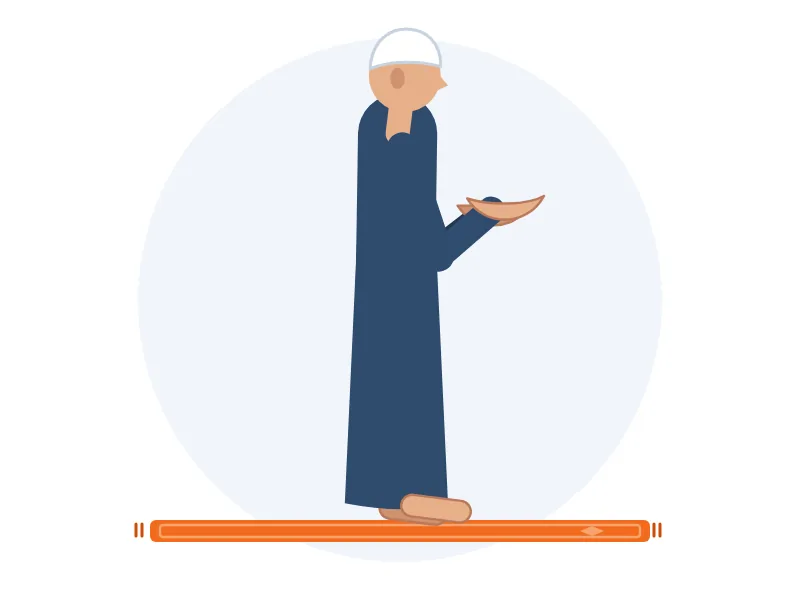 The qunut before bowingAfter the recitation, say “Allahu akbar” raising your hands, then the qunut supplication.
Obligatory (wajib)
After the recitation of the 3rd rak‘ah, say “Allahu akbar” raising your hands as at the start, lower them, and say the qunut supplication quietly, then bow.
Takbir
اللَّهُ أَكْبَرُ
Allāhu akbarAllahu akbar
Allah is the Greatest.
اللَّهُمَّ إِيَّاكَ نعْبُدُ، وَلَكَ نُصَلِّي وَنَسْجُدُ، وَإِلَيْكَ نَسْعَى وَنَحْفِدُ، نَرْجُو رَحْمَتَكَ، وَنَخْشَى عَذَابَكَ، إِنَّ عَذَابَكَ بِالكَافِرِينَ مُلْحَقٌ. اللَّهُمَّ إِنَّا نَسْتَعينُكَ، وَنَسْتَغْفِرُكَ، وَنُثْنِي عَلَيْكَ الْخَيْرَ، وَلاَ نَكْفُرُكَ، وَنُؤْمِنُ بِكَ، وَنَخْضَعُ لَكَ، وَنَخْلَعُ مَنْ يَكْفرُكَ.
Allāhumma iyyāka naʿbud, wa laka nuṣallī wa nasjud, wa ilayka nasʿā wa naḥfid, narjū raḥmataka wa nakhshā ʿadhābak, inna ʿadhābaka bi-l-kāfirīna mulḥaq. Allāhumma innā nastaʿīnuka wa nastaghfiruk, wa nuthnī ʿalayka l-khayra wa lā nakfuruk, wa nuʾminu bika, wa nakhḍaʿu lak, wa nakhlaʿu man yakfurukAllahumma iyyaka na‘bud, wa laka nusalli wa nasjud, wa ilayka nas‘a wa nahfid, narju rahmataka wa nakhsha ‘adhabak, inna ‘adhabaka bi-l-kafirina mulhaq. Allahumma inna nasta‘inuka wa nastaghfiruk, wa nuthni ‘alayka l-khayra wa la nakfuruk, wa nu’minu bika, wa nakhda‘u lak, wa nakhla‘u man yakfuruk
O Allah, it is You we worship, and unto You we pray and prostrate, and towards You we hasten and You we serve. We hope for Your mercy and fear Your punishment, verily Your punishment will fall upon the disbelievers.O Allah, we seek Your aid and ask Your pardon, we praise You with all good and do not disbelieve in You.We believe in You and submit unto You, and we disown and reject those who disbelieve in You.
According to the Hanafi school
The qunut of witr is obligatory (wajib), all year round, before bowing; whoever does not know it says “Rabbana atina fi d-dunya hasanah…”.
The views of the four schools
- Hanafi Obligatory (wajib)
The qunut of witr is obligatory (wajib), all year round, before bowing; whoever does not know it says “Rabbana atina fi d-dunya hasanah…”.
-
 Bowing and risingBow, then rise.
Bow saying “Allahu akbar”, then rise saying “Sami‘a llahu liman hamidah”.
سُبْحانَ رَبِّيَ الْعَظِيمِ. ثلاث مرَّاتٍ.
Subḥāna rabbiya l-ʿaẓīmSubhana rabbiya l-‘azim
How perfect my Lord is, The Supreme.’(three times)
سَمِعَ اللَّهُ لِمَنْ حَمِدَهُ.
Samiʿa l-lāhu liman ḥamidahSami‘a l-lahu liman hamidah
(May Allah answer he who praises Him.)(This supplication is to be made while rising.)
-
The qunut after bowingStanding after the bowing, hands raised, make the qunut supplication.
SunnahSunnah
Once you have risen, raise your hands in front of you and say the qunut supplication, then prostrate.
اللَّهُمَّ اهْدِنِي فِيمَنْ هَدَيْتَ، وَعَافِنِي فِيمَنْ عَافَيْتَ، وَتَوَلَّنِي فِيمَنْ تَوَلَّيْتَ، وَبَارِكْ لِي فِيمَا أَعْطَيْتَ، وَقِنِي شَرَّ مَا قَضَيْتَ؛ فَإِنَّكَ تَقْضِي وَلاَ يُقْضَى عَلَيْكَ، إِنَّهُ لاَ يَذِلُّ مَنْ وَالَيْتَ، [وَلاَ يَعِزُّ مَنْ عَادَيْتَ]، تَبارَكْتَ رَبَّنا وَتَعَالَيْتَ.
Allāhumma hdinī fīman hadayt, wa ‘āfinī fīman ‘āfayt, wa tawallanī fīman tawallayt, wa bārik-lī fīmā a‘tayt, wa qinī sharra mā qadayt. fa-innaka taqdī wa lā yuqdā ‘alayk. innahu lā yadhillu man wālayt [wa lā ya‘izzu man ‘ādayt]. tabārakta rabbanā wa ta‘ālaytAllahumma hdini fiman hadayt, wa ‘afini fiman ‘afayt, wa tawallani fiman tawallayt, wa barik-li fima a‘tayt, wa qini sharra ma qadayt. fa-innaka taqdi wa la yuqda ‘alayk. innahu la yadhillu man walayt [wa la ya‘izzu man ‘adayt]. tabarakta rabbana wa ta‘alayt
(O Allah, guide me along with those whom You have guided, pardon me along with those whom You have pardoned, be an ally to me along with those whom You are an ally to and bless for me that which You have bestowed. Protect me from the evil You have decreed for verily You decree and none can decree over You.For surety, he whom you show allegiance to is never abased and he whom You take as an enemy is never honoured and mighty. O our Lord, Blessed and Exalted are You.)(Evil you have decreed: Allah does not create pure evil which does not have any good or contain any benefit, wisdom or mercy at all, nor does He punish anyone without having commited a sin. Something can be good in terms of its creation when viewed in a particular perspective and at the same time be evil when viewed in another way.Allah created the devil and by him, He tests His servants, so there are those who hate the devil, fight him and his way and they stand at enmity towards him and his followers and there are others who are at allegiance with the devil and follow his steps. So evil exists in His creatures by His will and wisdom, not in His actions or act of creating.)
According to the Shafi‘i school
The qunut is made in the witr of the second half of Ramadan.
According to the Hanbali school
The qunut is made in the witr all year round.
According to the Maliki school
No qunut in witr (it is made at dawn).
The views of the four schools
- Maliki
No qunut in witr (it is made at dawn).
- Shafi‘i Sunnah
The qunut is made in the witr of the second half of Ramadan.
- Hanbali Sunnah
The qunut is made in the witr all year round.
References Abu Dawud 1425, al-Tirmidhi 464, an-Nasa’i 1745
-
Prostrations, tashahhud and salamFinish as in any prayer.
Make the two prostrations, the tashahhud and the prayer upon the Prophet ﷺ, then give the salam.
التَّحِيَّاتُ لِلَّهِ، وَالصَّلَواتُ، وَالطَّيِّباتُ، السَّلاَمُ عَلَيْكَ أَيُّهَا النَّبِيُّ وَرَحْمَةُ اللَّهِ وَبَرَكَاتُهُ، السَّلاَمُ عَلَيْنَا وَعَلَى عِبَادِ اللَّهِ الصَّالِحِينَ. أَشْهَدُ أَنْ لاَ إِلَهَ إِلاَّ اللَّهُ وَأَشْهَدُ أَنَّ مُحَمَّداً عَبْدُهُ وَرَسولُهُ.
At-taḥiyyātu li-l-lāh, wa ṣ-ṣalawātu wa ṭ-ṭayyibāt. as-salāmu ʿalayka ayyuha n-nabiyu wa raḥmatu l-lāhi wa barakātuh. as-salāmu ʿalaynā wa ʿalā ʿibādi l-lāhi ṣ-ṣāliḥīn. ash-hadu an lā ilāha illā l-lāh, wa ash-hadu anna muḥammadan ʿabduhu wa rasūluhAt-tahiyyatu li-l-lah, wa s-salawatu wa t-tayyibat. as-salamu ‘alayka ayyuha n-nabiyu wa rahmatu l-lahi wa barakatuh. as-salamu ‘alayna wa ‘ala ‘ibadi l-lahi s-salihin. ash-hadu an la ilaha illa l-lah, wa ash-hadu anna muhammadan ‘abduhu wa rasuluh
(At-tahiyyat is for Allah. All acts of worship and good deeds are for Him. Peace and the mercy and blessings of Allah be upon you O Prophet. Peace be upon us and all of Allah’s righteous servants. I bear witness that none has the right to be worshipped except Allah and I bear witness that Muhammad is His slave and Messenger.)(At-tahiyyat: all words which indicate the glorification of Allah. His eternal existence, His perfection and His sovereignty.)
اللَّهُمَّ صَلِّ عَلَى مُحَمَّدٍ، وَعَلَى آلِ مُحَمَّدٍ، كَمَا صَلَّيتَ عَلَى إِبْرَاهِيمَ، وَعَلَى آلِ إِبْرَاهِيمَ، إِنَّكَ حَمِيدٌ مَجِيدٌ، اللَّهُمَّ بَارِكْ عَلَى مُحَمَّدٍ وَعَلَى آلِ مُحَمَّدٍ، كَمَا بَارَكْتَ عَلَى إِبْرَاهِيمَ وَعَلَى آلِ إِبْرَاهِيمَ، إِنَّكَ حَمِيدٌ مَجِيدٌ.
Allāhumma ṣalli ʿalā muḥammadin wa ʿalā āli muḥammadin kamā ṣallayta ʿalā ibrāhīma wa ʿalā āli ibrāhīm. innaka ḥamīdun majīd. Allāhumma bārik ʿalā muḥammadin wa ʿalā āli muḥammadin kamā bārakta ʿalā ibrāhīma wa ʿalā āli ibrāhīm. innaka ḥamīdun majīdAllahumma salli ‘ala muhammadin wa ‘ala ali muhammadin kama sallayta ‘ala ibrahima wa ‘ala ali ibrahim. innaka hamidun majid. Allahumma barik ‘ala muhammadin wa ‘ala ali muhammadin kama barakta ‘ala ibrahima wa ‘ala ali ibrahim. innaka hamidun majid
(O Allah, send prayers upon Muhammad and the followers of Muhammad, just as You sent prayers upon Ibraheem and upon the followers of Ibraheem. Verily, You are full of praise and majesty. O Allah, send blessings upon Mohammad and upon the family of Muhammad, just as You sent blessings upon Ibraheem and upon the family of Ibraheem. Verily, You are full of praise and majesty.)(send prayers: praise and exalt him in the highest and superior of gatherings: that of the closest angels to Allah)((al) has been translated in it’s broadest sense: some scholars are of the view that the meaning here is more specific and that it means: his followers from among his family.)
Closing salutation (taslim)
السَّلَامُ عَلَيْكُمْ وَرَحْمَةُ اللَّهِ
As-salāmu ʿalaykum wa raḥmatu llāhAs-salamu ‘alaykum wa rahmatu llah
Peace and the mercy of Allah be upon you.
-
 After witrSay “Subhana l-maliki l-quddus” three times.
After the salam, the Prophet ﷺ would say “Subhana l-maliki l-quddus” three times, raising his voice the third time.
سُبْحَانَ المَلِكِ القُدُّوسِ ثلاثَ مرَّاتٍ والثَّالِثَةُ يَجْهَرُ بها ويَمُدُّ بها صَوتَهُ يقولُ: [رَبِّ الْمَلاَئِكَةِ وَالرُّوحِ].
Subḥān al-maliki l-quddūs Rabbi l-malāʾikati wa-r-rūḥSubhan al-maliki l-quddus Rabbi l-mala’ikati wa-r-ruh
How perfect The King, The Holy One is.(three times) on the third time he would raise his voice, elongate it and add: (Lord of the angles and the Rooh (i.e. Jibra-eel).)
Frequently asked questions
- Is witr obligatory?
-
It is obligatory (wajib) for Hanafis, and a strongly confirmed sunnah for the other three schools.
- Can witr be a single rak‘ah?
-
Yes, for Malikis (after two rak‘ahs), Shafi‘is and Hanbalis; not for Hanafis.
A learning guide based on the references cited. For a particular case, ask a person of knowledge. References Abu Dawud 1422, al-Bukhari 998, Muslim 751, al-Bukhari 990, Abu Dawud 1425, Abu Dawud 1423, al-Tirmidhi 462, al-Tirmidhi 464, an-Nasa’i 1745
Comments
No comments yet.
Log in to comment Create an account