
How to pray the prayer for rain (istisqa’)
How to pray the prayer for rain, step by step
The istisqa’ prayer in times of drought — preparation, two rak‘ahs, sermon, supplications with their audio and turning the cloak.

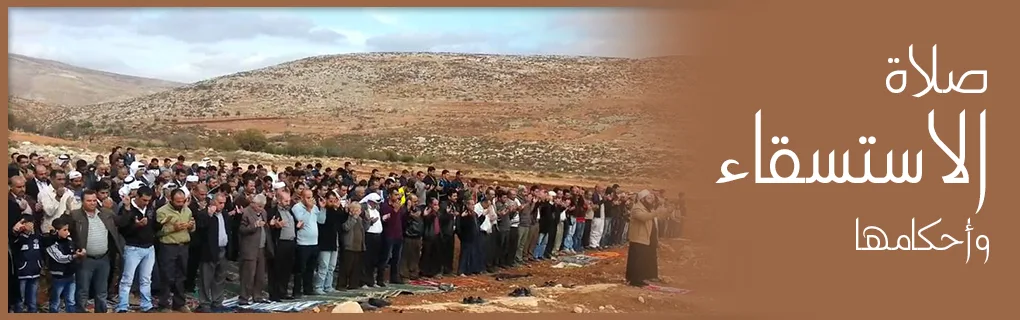
In times of drought, the Prophet ﷺ went out to the prayer ground in humility, prayed two rak‘ahs, supplicated to Allah facing the qibla and turned his cloak. The prayer is led by the imam, in congregation.
By default, the school most followed by readers of this language; the views of the other schools remain visible.
The steps
-
PrepareRepentance, seeking forgiveness, charity, reconciliation; the imam may call for a fast.
Before going out, people repent, seek forgiveness, give charity and return what was taken unjustly. The imam may call for fasting on the preceding days.
-
 Go out in humilityGo out to the prayer ground in plain clothes, with humility.
The Prophet ﷺ went out “humble, in plain clothes, with reverence, imploring Allah”. The elderly and children are also brought out.
References Abu Dawud 1165, an-Nasa’i 1506
-
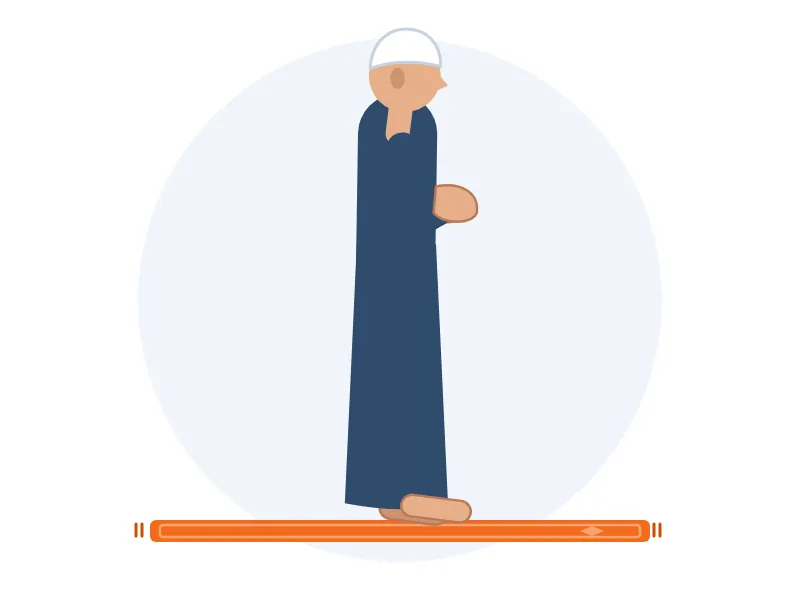 Two rak‘ahsTwo rak‘ahs recited aloud, like the Eid prayer.
RecommendedSunnahSunnahSunnah
The imam leads two rak‘ahs aloud, with no adhan or iqamah.
Takbir
اللَّهُ أَكْبَرُ
Allāhu akbarAllahu akbar
Allah is the Greatest.
According to the Hanafi school
For Abu Hanifah, istisqa’ is above all supplication and seeking forgiveness; his two disciples hold that two rak‘ahs are prayed.
According to the Maliki school
Two rak‘ahs like an ordinary prayer, then the sermon.
According to the Shafi‘i school
Two rak‘ahs with the extra takbirs of Eid (7 and 5).
According to the Hanbali school
Two rak‘ahs with the extra takbirs of Eid.
The views of the four schools
- Hanafi Recommended
For Abu Hanifah, istisqa’ is above all supplication and seeking forgiveness; his two disciples hold that two rak‘ahs are prayed.
- Maliki Sunnah
Two rak‘ahs like an ordinary prayer, then the sermon.
- Shafi‘i Sunnah
Two rak‘ahs with the extra takbirs of Eid (7 and 5).
- Hanbali Sunnah
Two rak‘ahs with the extra takbirs of Eid.
References al-Bukhari 1012, Abu Dawud 1165
-
 The sermonThe imam gives a sermon centred on seeking forgiveness.
The imam gives a sermon in which he seeks forgiveness (istighfar) often and recalls the verses that call to it.
References Abu Dawud 1165
-
Supplications with raised handsFacing the qibla, hands raised high, we pray for rain.
The imam turns towards the qibla, raises his hands high and supplicates insistently; the worshippers say “amin”.
اللَّهُمَّ اسْقِنَا غَيْثاً مُغِيثاً مَرِيئاً مَرِيعاً، نَافِعاً غَيْرَ ضَارٍّ، عَاجِلاً غَيْرَ آجِلٍ.
Allāhumma sqinā ghaythan mughīthā, marīʾan marīʿā, nāfiʿan ghayra ḍārr, ʿājilan ghayra ājilAllahumma sqina ghaythan mughitha, mari’an mari‘a, nafi‘an ghayra darr, ‘ajilan ghayra ajil
O Allah, send upon us helpful, wholesome and healthy rain, beneficial not harmful rain, now, not later.
اللَّهُمَّ أَغِثْنَا، اللَّهُمَّ أَغِثْنَا، اللَّهُمَّ أَغِثْنَا.
Allāhumma aghithnā, Allāhumma aghithnā, Allāhumma aghithnāAllahumma aghithna, Allahumma aghithna, Allahumma aghithna
O Allah, relieve us, O Allah, relieve us, O Allah, relieve us.
اللَّهُمَّ اسْقِ عِبَادَكَ، وَبَهَائِمَكَ، وَانْشُرْ رَحْمَتَكَ، وَأَحْيِي بَلَدَكَ الْمَيِّتَ.
Allāhumma sqi ʿibādaka wa bahāʾimak. wa nshur raḥmatak, wa aḥyī baladaka l-mayyitAllahumma sqi ‘ibadaka wa baha’imak. wa nshur rahmatak, wa ahyi baladaka l-mayyit
O Allah, provide water for Your servants and Your cattle, spread out Your mercy and resurrect Your dead land.
References al-Bukhari 1014, Muslim 897, Abu Dawud 1169
-
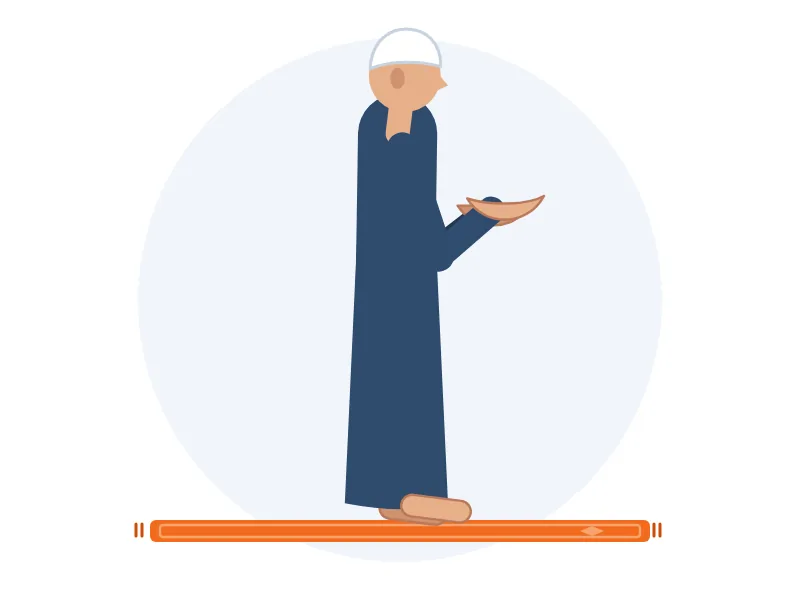 Turn your cloakThe imam, and the worshippers with him, turn their cloaks.
The Prophet ﷺ turned his cloak (right side to the left), in hope that the situation would change. Men do the same; women do not.
References al-Bukhari 1012, Muslim 894
Frequently asked questions
- Does the rain prayer have takbirs like Eid?
-
For Shafi‘is and Hanbalis, yes; for Malikis, it is an ordinary two-rak‘ah prayer.
A learning guide based on the references cited. For a particular case, ask a person of knowledge. References al-Bukhari 1012, al-Bukhari 1024, Muslim 894, Abu Dawud 1165, al-Tirmidhi 558, al-Bukhari 1014, Abu Dawud 1169, an-Nasa’i 1506, Muslim 897
Comments
No comments yet.
Log in to comment Create an account