
How to perform tayammum (dry ablution)
How to perform tayammum, step by step
Tayammum replaces wudu and ghusl when water is unavailable or harmful: 8 illustrated steps, with the view of your school.

Tayammum is performed with clean earth when there is no water, when the water is needed for drinking, or when water would harm your health (illness, wound, dangerous cold). It replaces both wudu and ghusl.
By default, the school most followed by readers of this language; the views of the other schools remain visible.
The steps
-
 Make the intentionResolve in your heart to perform tayammum so that you can pray.
Obligatory (fard)Obligatory (fard)Obligatory (fard)Condition
The intention is in the heart: you perform tayammum in place of wudu (or ghusl) so that you can pray. It is obligatory in all four schools.
According to the Maliki school
Specify in your intention whether it replaces ghusl (major impurity); one obligatory prayer per tayammum.
According to the Shafi‘i school
The intention is to make the prayer permissible; one obligatory prayer per tayammum.
The views of the four schools
- Hanafi Obligatory (fard)
- Maliki Obligatory (fard)
Specify in your intention whether it replaces ghusl (major impurity); one obligatory prayer per tayammum.
- Shafi‘i Obligatory (fard)
The intention is to make the prayer permissible; one obligatory prayer per tayammum.
- Hanbali Condition
Did I do it right?
References al-Bukhari 1
-
Say “Bismillah”Say “Bismillah” before you begin.
SunnahRecommendedSunnahObligatory (wajib)
Say “Bismillah” quietly.
(بِسْمِ اللَّهِ).
Bismi l-lāhBismi l-lah
In the name of Allah.
According to the Hanbali school
Saying Bismillah is obligatory when you remember it, as for wudu.
The views of the four schools
- Hanafi Sunnah
- Maliki Recommended
- Shafi‘i Sunnah
- Hanbali Obligatory (wajib)
Saying Bismillah is obligatory when you remember it, as for wudu.
-
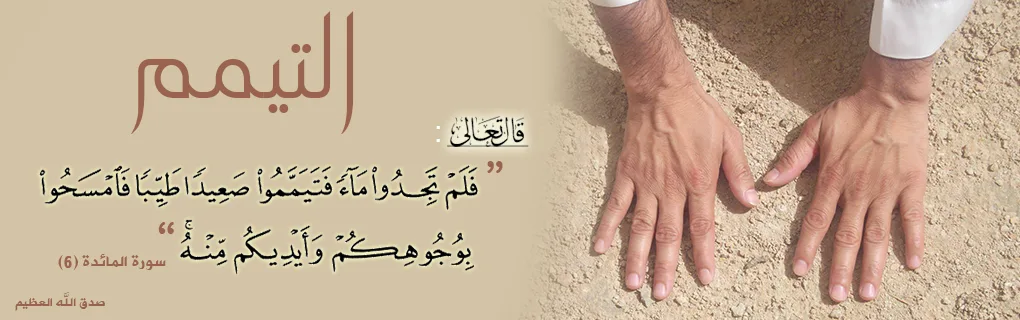
Strike the earth with the palmsPlace or strike both open palms once on clean earth.
Obligatory (fard)Obligatory (fard)Obligatory (fard)Obligatory (fard)
Strike lightly, fingers spread, a surface of clean earth (ground, sand or stone depending on your school). The Prophet ﷺ said to ‘Ammar: “It would have been enough for you to do this,” then he struck the ground with his palms.
According to the Hanafi school
Anything of the nature of the earth is suitable (sand, stone, clay, lime), even without dust.
According to the Maliki school
Earth, sand, stone and anything that is part of the ground (sa‘id) are suitable.
According to the Shafi‘i school
Only earth (turab) that has dust is suitable.
According to the Hanbali school
Only earth that has dust is suitable.
The views of the four schools
- Hanafi Obligatory (fard)
Anything of the nature of the earth is suitable (sand, stone, clay, lime), even without dust.
- Maliki Obligatory (fard)
Earth, sand, stone and anything that is part of the ground (sa‘id) are suitable.
- Shafi‘i Obligatory (fard)
Only earth (turab) that has dust is suitable.
- Hanbali Obligatory (fard)
Only earth that has dust is suitable.
Did I do it right?
References al-Bukhari 338, Muslim 368
-
 Blow lightly on the handsBlow on your hands or shake them gently to remove the excess dust.
SunnahRecommendedRecommendedRecommended
The Prophet ﷺ blew lightly into his hands before wiping: there is no need to dirty your face.
References al-Bukhari 338
-
 Wipe the whole facePass your palms over the whole face, once.
Obligatory (fard)Obligatory (fard)Obligatory (fard)Obligatory (fard)
Pass both palms over your whole face, from forehead to chin and from ear to ear, once only. The face is wiped, not rubbed with earth.
Did I do it right?
References Quran, Al-Ma’idah 5:6, al-Bukhari 347
-
Strike the earth a second timeStrike the earth again with your palms, for the hands and arms.
Obligatory (fard)SunnahObligatory (fard)
Strike the earth again with both palms; this second strike is for wiping the hands and arms.
According to the Hanafi school
Two strikes are obligatory, one for the face and one for the arms.
According to the Maliki school
The second strike is a sunnah.
According to the Shafi‘i school
Two strikes are obligatory.
The views of the four schools
- Hanafi Obligatory (fard)
Two strikes are obligatory, one for the face and one for the arms.
- Maliki Sunnah
The second strike is a sunnah.
- Shafi‘i Obligatory (fard)
Two strikes are obligatory.
-
 Wipe the handsWipe the back of the right hand with the left palm, then the other way round.
Obligatory (fard)Obligatory (fard)Obligatory (fard)Obligatory (fard)
Pass your left palm over the back of your right hand, then your right palm over the back of your left hand. Depending on your school, you stop at the wrists or go up to the elbows. Remove a tight ring.
According to the Hanafi school
Wipe the hands and forearms up to and including the elbows (obligatory).
According to the Maliki school
Up to the wrists is obligatory; up to the elbows is a sunnah.
According to the Shafi‘i school
Wipe up to and including the elbows (obligatory), keeping the order: face, then arms.
According to the Hanbali school
Up to the wrists is enough (the backs of the hands and the palms), based on the hadith of ‘Ammar.
The views of the four schools
- Hanafi Obligatory (fard)
Wipe the hands and forearms up to and including the elbows (obligatory).
- Maliki Obligatory (fard)
Up to the wrists is obligatory; up to the elbows is a sunnah.
- Shafi‘i Obligatory (fard)
Wipe up to and including the elbows (obligatory), keeping the order: face, then arms.
- Hanbali Obligatory (fard)
Up to the wrists is enough (the backs of the hands and the palms), based on the hadith of ‘Ammar.
Did I do it right?
References al-Bukhari 347, Muslim 368
-
 Say the testimonyAs after wudu, say the testimony of faith.
RecommendedRecommendedSunnahSunnah
The jurists recommend saying the same testimony after tayammum as after wudu. Your tayammum is done: you can pray.
(أَشْهَدُ أَنْ لاَ إِلَهَ إِلاَّ اللَّهُ وَحْدَهُ لاَ شَرِيكَ لَهُ وَأَشْهَدُ أَنَّ مُحَمَّداً عَبْدُهُ وَرَسُولُهُ..).
Ash-hadu an lā ilāha illā l-lāh waḥdahu lā sharīka lah wa ash-hadu anna muḥammadan ʿabduhu wa rasūluhAsh-hadu an la ilaha illa l-lah wahdahu la sharika lah wa ash-hadu anna muhammadan ‘abduhu wa rasuluh
I bear witness that none has the right to be worshipped except Allah, alone without partner, and I bear witness that Muhammad is His slave and Messenger.
Frequently asked questions
- When is tayammum allowed?
-
When there is no water (or not enough), when the water is needed for drinking, or when water would harm your health (illness, wound, dangerous cold with no way to heat it). “If you find no water, then seek clean earth” (Quran 4:43).
- What breaks tayammum?
-
Everything that breaks wudu, and finding water (or becoming able to use it) before the prayer.
- Does tayammum replace ghusl?
-
Yes. Someone in a state of major impurity who cannot use water performs the same tayammum with the intention of replacing ghusl. They perform ghusl as soon as they are able to use water.
References al-Bukhari 344, al-Bukhari 338
A learning guide based on the references cited. For a particular case, ask a person of knowledge. References Quran, An-Nisa 4:43, Quran, Al-Ma’idah 5:6, al-Bukhari 338, al-Bukhari 347, Muslim 368, al-Bukhari 344, al-Bukhari 1
Comments
No comments yet.
Log in to comment Create an account