
How to pray while travelling: shortening and combining
How to pray while travelling, step by step
Shortening the four-rak‘ah prayers and combining prayers while travelling — distance, duration and method, according to your school.
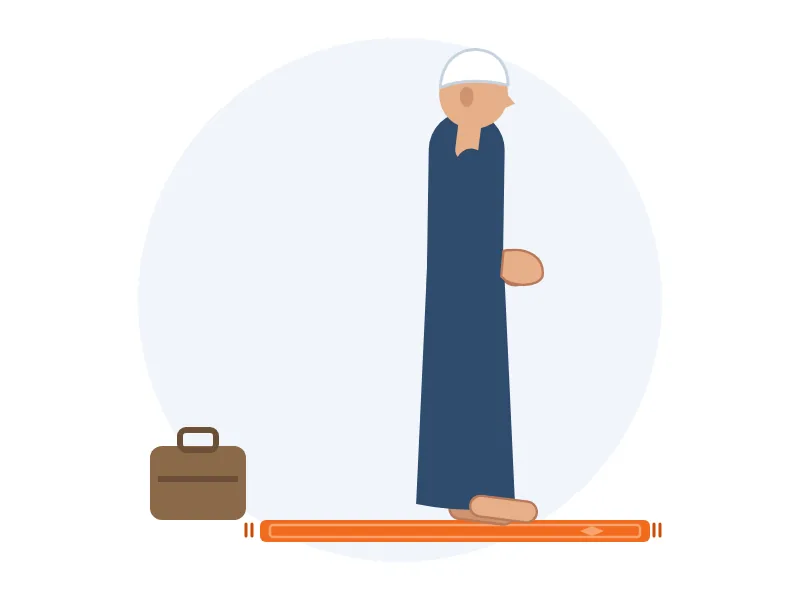
When travelling, Allah lightens the prayer: four-rak‘ah prayers are prayed as two, and most schools allow combining Dhuhr with ‘Asr and Maghrib with ‘Isha. “When you travel through the land, there is no blame on you for shortening the prayer” (4:101).
By default, the school most followed by readers of this language; the views of the other schools remain visible.
The steps
-
Am I a traveller?Travel begins from about 80 to 90 km, once you have left your town.
You become a traveller when you leave the last houses of your town for a journey of about 80 to 90 km or more, and you remain one during the journey and a short stay.
According to the Hanafi school
Three days’ walk, about 90 km according to the Diyanet; intending to stay 15 days or more ends the journey.
According to the Maliki school
Four burud, about 80 to 89 km; intending to stay four full days ends the journey.
According to the Shafi‘i school
About 81 to 89 km; a stay of four days, not counting the days of arrival and departure, ends the journey.
According to the Hanbali school
About 80 to 89 km; intending to stay more than four days (more than twenty prayers) ends the journey.
The views of the four schools
- Hanafi
Three days’ walk, about 90 km according to the Diyanet; intending to stay 15 days or more ends the journey.
- Maliki
Four burud, about 80 to 89 km; intending to stay four full days ends the journey.
- Shafi‘i
About 81 to 89 km; a stay of four days, not counting the days of arrival and departure, ends the journey.
- Hanbali
About 80 to 89 km; intending to stay more than four days (more than twenty prayers) ends the journey.
Did I do it right?
References Quran, An-Nisa 4:101, al-Bukhari 1080, al-Bukhari 1081
-
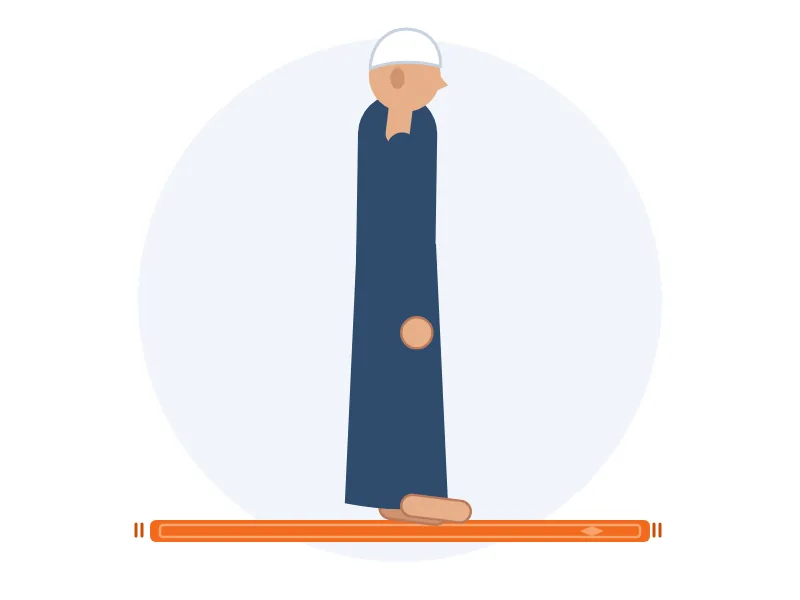 The intention to shortenIntend to pray as a traveller.
Obligatory (wajib)SunnahRecommendedRecommended
At the start of the prayer, keep in mind that you are praying it shortened.
According to the Hanafi school
Shortening is obligatory; praying four by mistake is made good by the prostration of forgetfulness if you sat after the 2nd rak‘ah.
According to the Maliki school
Shortening is a confirmed sunnah.
According to the Shafi‘i school
The intention to shorten is required at the opening takbir; shortening is permitted.
According to the Hanbali school
The intention to shorten is required; shortening is preferable.
The views of the four schools
- Hanafi Obligatory (wajib)
Shortening is obligatory; praying four by mistake is made good by the prostration of forgetfulness if you sat after the 2nd rak‘ah.
- Maliki Sunnah
Shortening is a confirmed sunnah.
- Shafi‘i Recommended
The intention to shorten is required at the opening takbir; shortening is permitted.
- Hanbali Recommended
The intention to shorten is required; shortening is preferable.
References al-Bukhari 1090
-
 Pray Dhuhr, ‘Asr and ‘Isha as two rak‘ahsThese three prayers are prayed as two rak‘ahs, like Fajr.
Dhuhr, ‘Asr and ‘Isha are prayed as two rak‘ahs: after the 2nd rak‘ah you recite the final tashahhud and give the salam. ‘A’ishah said: “The prayer was first prescribed as two rak‘ahs; the travel prayer remained so.”
References al-Bukhari 1090, Muslim 685
-
Fajr and Maghrib do not changeFajr stays at two rak‘ahs and Maghrib at three.
Fajr (2 rak‘ahs) and Maghrib (3 rak‘ahs) are not shortened, by agreement of the scholars.
-
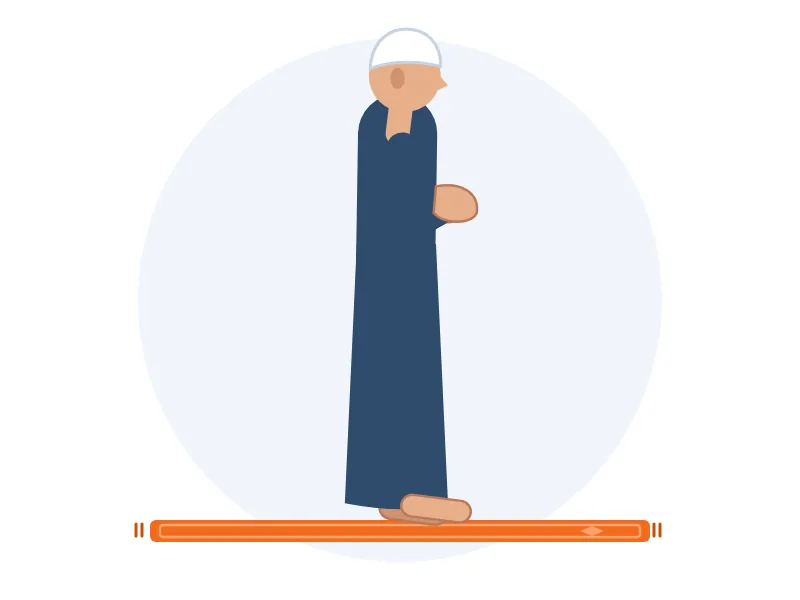 Combine two prayersDhuhr with ‘Asr, Maghrib with ‘Isha, in the time of the first or of the second.
RecommendedRecommendedRecommended
You may pray Dhuhr and ‘Asr together, in the time of Dhuhr (bringing forward) or of ‘Asr (delaying), and likewise Maghrib and ‘Isha. Make an iqamah for each prayer, with no voluntary prayer between them.
According to the Maliki school
Combining is permitted on the road; it is especially recommended while actually travelling.
According to the Shafi‘i school
Bringing the second prayer forward requires keeping the order (the first prayer first) and praying them one after the other.
According to the Hanbali school
Combining is permitted for the traveller, in the time of the first or of the second prayer.
The views of the four schools
- Maliki Recommended
Combining is permitted on the road; it is especially recommended while actually travelling.
- Shafi‘i Recommended
Bringing the second prayer forward requires keeping the order (the first prayer first) and praying them one after the other.
- Hanbali Recommended
Combining is permitted for the traveller, in the time of the first or of the second prayer.
References Muslim 705, Muslim 706, al-Bukhari 1111, Muslim 704
-
Each prayer in its timeIn the Hanafi school, each prayer is prayed in its own time, without combining.
In the Hanafi school, two prayers are not combined in the time of one of them, except at ‘Arafah and Muzdalifah during the Hajj. You may pray Dhuhr at the end of its time and ‘Asr at the start of its own.
-
Behind a resident imamIf the imam is not travelling, pray four rak‘ahs with him.
A traveller praying behind a resident imam prays as he does, four rak‘ahs. A travelling imam gives the salam after two rak‘ahs and the residents complete their prayer.
-
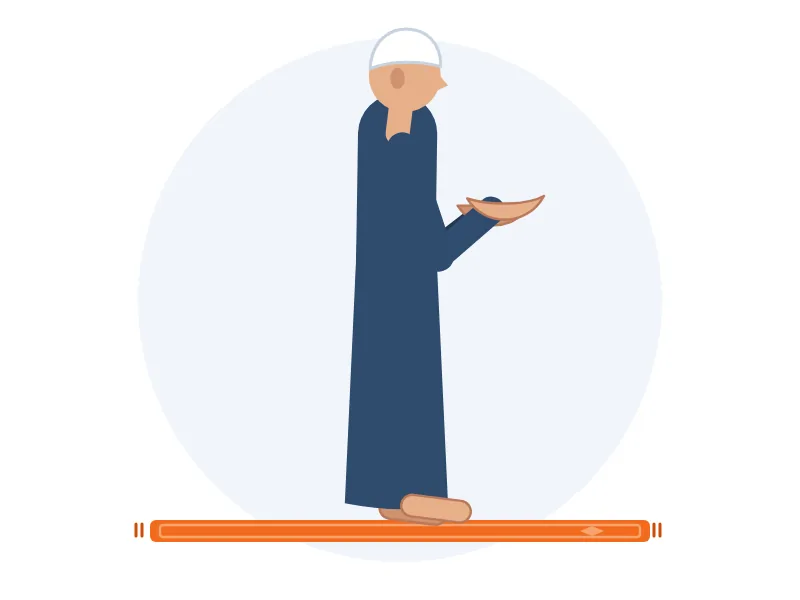 Voluntary prayers while travellingYou may leave the regular sunnah prayers, except the two rak‘ahs of Fajr and the witr.
Ibn ‘Umar travelled with the Prophet ﷺ and did not see him pray the sunnahs of the obligatory prayers while travelling; he did, however, keep the two rak‘ahs before Fajr and the witr. Other voluntary prayers remain permitted.
References al-Bukhari 1101
-
On arrivalBack home, or settled for a long stay, pray the full prayers again.
As soon as you return to your town, or decide on a stay longer than your school’s limit, you pray four rak‘ahs again.
References al-Bukhari 1080
Frequently asked questions
- What distance is needed to shorten?
-
About 80 to 90 km depending on the school; the Diyanet uses 90 km.
- For how long can you shorten?
-
During the journey and a short stay — less than 15 days for Hanafis, less than four days for the other schools.
A learning guide based on the references cited. For a particular case, ask a person of knowledge. References Quran, An-Nisa 4:101, al-Bukhari 1090, Muslim 685, al-Bukhari 1080, al-Bukhari 1081, Muslim 705, Muslim 706, al-Bukhari 1111, Muslim 704, al-Bukhari 1101
Comments
No comments yet.
Log in to comment Create an account